About us
SINCE 1909,REINVENTING THE EXTRAORDINARY
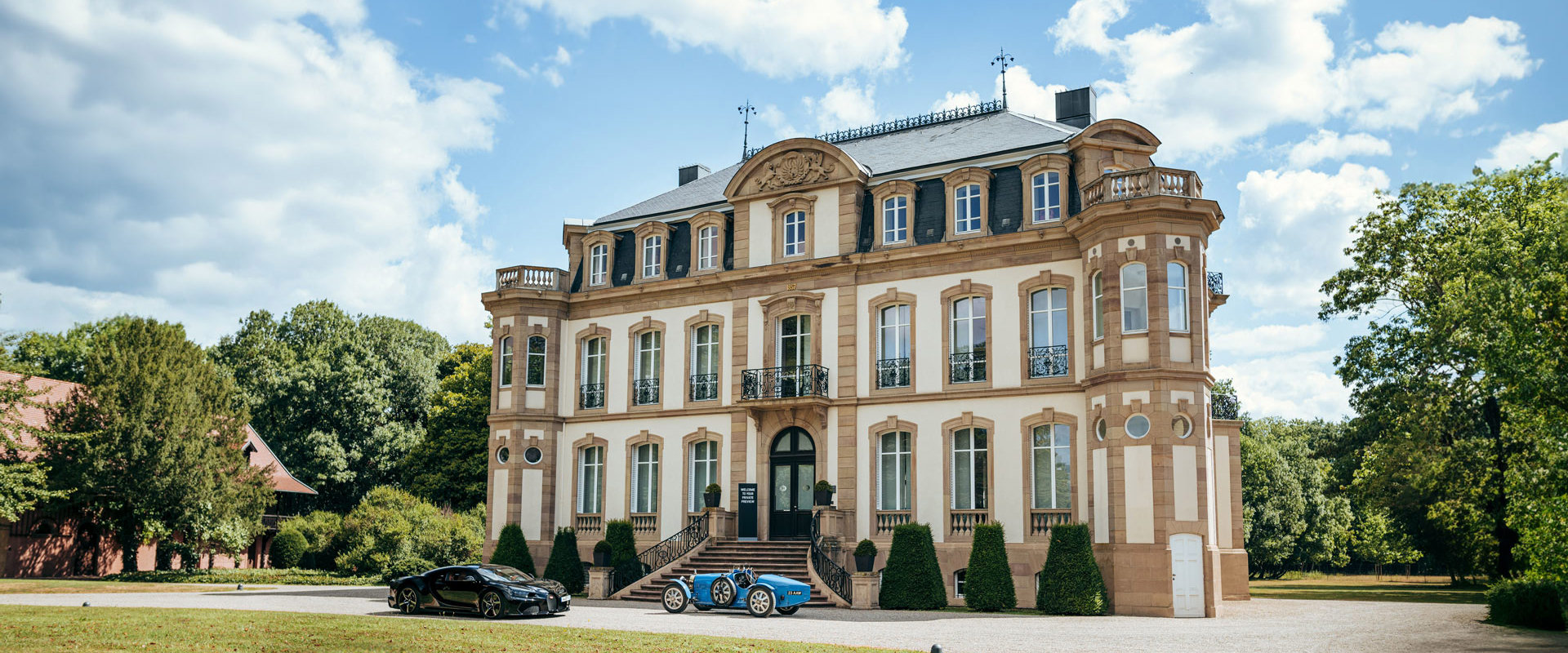
BUGATTI Automobiles has been at the pinnacle of the automotive industry for over 110 years, creating the world’s most powerful and luxurious cars from its home in Molsheim, France. Every car crafted since the company was founded by Ettore Bugatti in 1909 is desired by collectors and praised for its comfort, design, technology and performance.
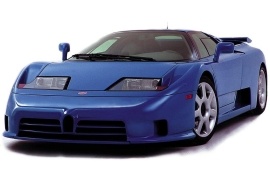
Throughout its history, BUGATTI has had a number of ingenious custodians, each ushering in a new era with their individual blend of artistry and engineering excellence. Following Ettore and his son Jean Bugatti, the brand was revived by Romano Artioli in the late 1980s. His creation, the EB110, introduced a number of innovations that set a new benchmark for sports car performance, including a quad-turbocharged engine, carbon fiber monocoque and advanced four-wheel-drive system.
In the early 2000s, BUGATTI entered another level under the stewardship of Ferdinand Piëch. With the introduction of the VEYRON, BUGATTI created an entirely new segment: the hyper sports car, becoming the first production model to break through 1,000 PS and 400 km/h. In 2016, the CHIRON once again redefined speed and usability. Built around an evolution of the VEYRON’s 8.0-liter quad-turbo W16 a derivative of the CHIRON with 1,600 PS became the first series production vehicle to break the 300 mph barrier. The legendary W16 engine is also at the heart of highly exclusive coach built models: the DIVO, LA VOITURE NOIRE, CENTODIECI, BOLIDE AND W16 MISTRAL.
Today, BUGATTI is part of the BUGATTI RIMAC Group, guided by CEO Mate Rimac. A new era is dawning, inspired by the immortal words of the company's founder, Ettore: "If comparable, it is no longer BUGATTI." Mate will oversee the development of the next-generation of BUGATTI hyper sports cars, combining more than 110 years of innovation in combustion engines with the instant performance of the electric motor.
BUGATTI’s ethos of excellence in design and engineering extends far beyond the automotive world, with an inspiring range of BUGATTI products and experiences that bring the magic of Molsheim to enthusiasts all over the world. Every product that bears the famous BUGATTI ‘Macaron’ must uphold the BUGATTI brand values: Dedication, Excellence, Courage.
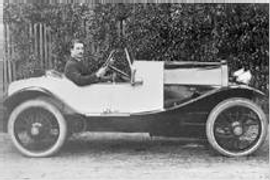
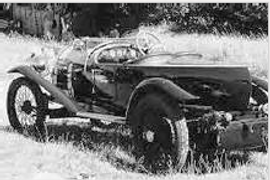
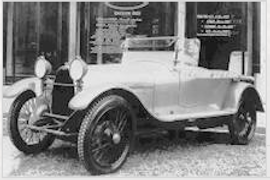
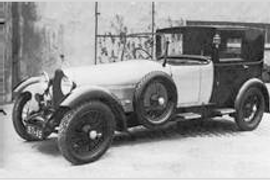
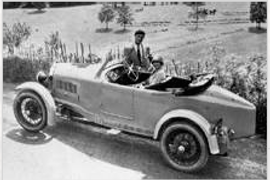
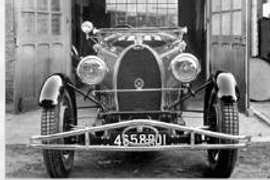
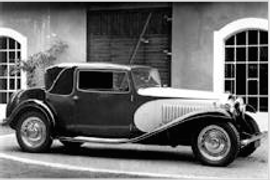
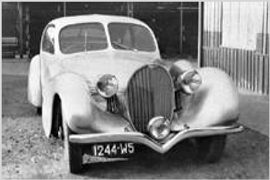
The Founder of Bugatti


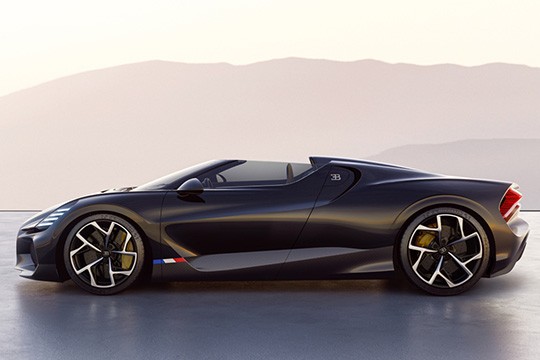
The French brand was already in the same boat with the Croatian manufacturer Rimac when it revealed the Mistral. It was unveiled by the company's new CEO, Mate Rimac, who created the most powerful and quickest electric car in the world, the Nevera. He even announced that the Mistral would be the last W16 Bugatti.
The Croatian CEO brought fresh ideas when he took over the Bugatti's helm. Thus, he understood that the brand needed a new, astonishing design, leading to the open-top Mistral. With its unique-looking LED headlights and the sculptured front end, the hypercar still featured the horseshoe-shaped center grille flanked by wide air-intakes that cooled the front brakes and helped the car's aerodynamic. From its profile, the Mistral featured a raked windshield and narrowed down side windows. Behind the cabin, the automaker created a taller structure that concealed the safety arches and the engine's air intake. At the back, the taillights looked like two arrows pointing towards the car's center.
Inside, the leather-clad cabin featured two seats separated by a tall center console and a sloped center stack. In addition, carbon-fiber elements decorated the interior and the door cards. The sports seats featured cutouts for a race harness, even though the car was mostly designed for street use, not for racing. Even though it could race faster than most of the cars on the planet.
Behind the cockpit, Bugatti installed its famous W16, a quad-turbocharged powerplant that was carried over from the Chiron. Its immense power and torque were sent in all corners of the car via a seven-speed automatic transmission.
Most of the vehicles produced by Bugatti after the Veyron were faster than the model it replaced. By faster, meaning higher top speed. But that wasn't the goal for the Divo. But still, it was faster.
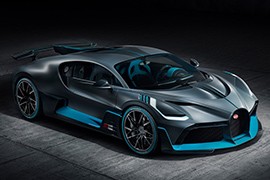
For the outside design, the car kept the main cues of the brand: a horse-shoe on the front with a large grille, a C-shaped side air-scoops and a long cabin that melted, visually the cockpit with the engine bay. The front had few air-intakes more and a new air-outlet on the hood was used to help to cool the front radiator.
For the performance point of view, the goal was to make the Divo faster than the Chiron on a race-track. And it proved that it can. Even though both had the same engine and transmission, the Divo was able to turn faster. Thanks to its improved aerodynamic and to the huge rear-wing, it had a negative aerodynamic, which means that the faster it goes, the more force is put on the road. But on a static measurement, the Divo was 35 kg (77 lbs) lighter than the Chiron.
Both the Chiron and the Divo also had the same tires and those were rated to a certain speed with a certain weight. Since the aerodynamic pressure was 90 kg (198 lbs) bigger on the Divo than on its older brother, the manufacturer didn't want to risk and limited the car to a maximum 380 kph (236 mph).
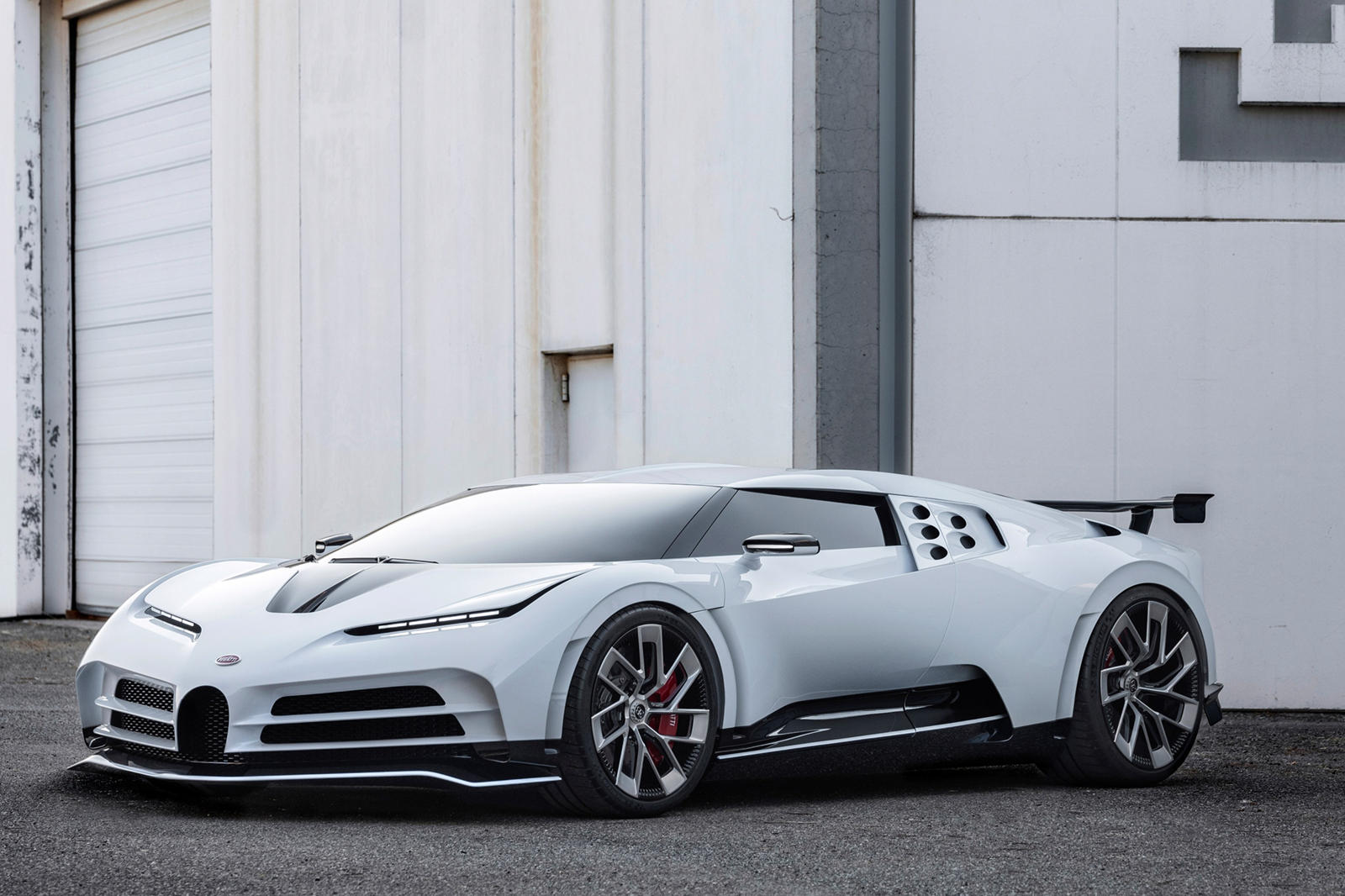
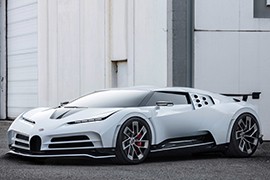
Bugatti is more than a car-manufacturer. It offers the most expensive vehicle that someone can buy as a new vehicle in the current market. After doing one special project, the Bugatti La Voiture Noire in one unit, the only French brand under the Volkswagen group decided to work on a limited series of 10 units of another special vehicle. It is called the Centodieci (One hundred and ten) and it is a double homage to the founder of the company and to the EB110, the car that brought back the Bugatti name on the market 110 years after Ettore Bugatti's birthday, in 15th of September 1990.
The front of the car resembles the front of the EB110, but in a new interpretation and keeping up with the new needs of a modern hypercar. The bigger vents, larger air-intakes and a taller central “keyhole” are very easy to suggest the connection with the EB110. In the rear, a bigger wing resembles the aerodynamic element from the EB110SS.
The taillights have an aerodynamic role to redirect air from the big W16 engine. The 8.0-liter quad-turbo gasoline engine offers 1600 hp, 100 more than the Chiron, upon which the Centodieci is based. The transmission is a dual-clutch 7-speed gearbox, which sends the power to an all-wheel-drive system. The sprint from 0 to 100 kph (62 mph) is done in 2.4 seconds while the 0-300 kph (186.4 mph) acceleration takes just 13.1 seconds. The price tag is a cool 8 million euros. All of the 10 units have been sold.
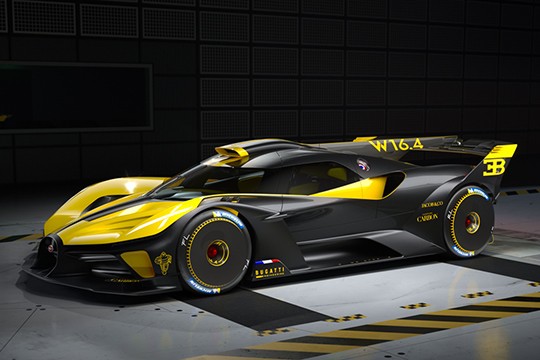
Bugatti's name is linked with a glorious motorsports history that included two wins at the fantastic Le Mans race in 1937 and 1939. However, over time, the French brand fell. It was almost dead when it was resurrected by Romano Artioli in the early '90s when the car manufacturer produced the EB-110. Later, in 1998, Bugatti was acquired by Volkswagen Group, which gave it back its glory with the mighty Veyron, followed by the Chiron and Divo. In 2020, the automaker digitally showed the Bolide, which took shape as a real car in 2021 at the Milano Motor Show.
The vehicle was designed around the mighty quad-turbocharged W16 engine. Its bodywork was completely made from carbon fiber, and it featured active aerodynamics. This allowed a downforce of up to 1,800 kg (3,968 lbs) for the rear axle and 800 kg (1,763 lbs) on the front axle when speeding at 320 kph (199 mph).
The hypercar weighed just a mere 1,240 kg (2,734 lbs), meaning that it could match the performance of a Formula 1 car. Yet unlike those race-cars, it could go with up to 500 kph (310.6 mph). As a result, it could lap the Le Mans racetrack in 3.07:1 minutes.
While most other vehicles produced by Bugatti boasted luxurious features, the only allowance for the Bolide was a cockpit for two occupants. It was fitted with two race seats, which allowed HANS installment. Everything was track-focused, and no detail was left aside. For instance, all the car's screws were made from titanium.
When it used 110 RON race fuel, the eight-liter powerplant produced 1,850 PS (1,825 hp) and 1,850 Nm (1,364 lb-ft) of torque. With 98 RON fuel, those figures decreased to 1,600 PS (1,578 hp) and 1,600 Nm (1,180 lb-ft) of torque. Power went in all corners via an especially designed seven-speed automatic (dual-clutch) gearbox.
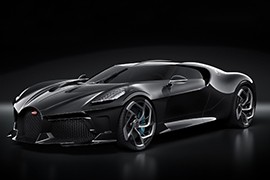
At the 2019 Geneva Motor Show, the exclusive super-car manufacturer Bugatti brought a new model, called “Le Voiture Noire” (The black car). This is a one of a kind car, and it was already sold for 11 million (plus taxes) euros before it was even showed.
The “La Voiture Noire” is an homage to the mighty Bugatti 57 SC Atlantic. It is bigger than the well known Chiron but shares the same engine. With the new model, Bugatti shows a connection with its tradition as a coach-builder. This new vehicle was ordered after the Chiron model was shown and one special Bugatti enthusiast wanted a one of a kind vehicle. The “La Voiture Noire” is the answer.
The model's new bodywork was specially designed to resemble the mighty 57 SC Atlantic but from a modern perspective. The sloped rear end and the flared rear-wheels arches are also inspired by the famous Bugatti supercar from the '40s.
With a reshaped bodywork and the same powerful engine, the unique model is the most expensive new car ever. With the same money, you could have bought 20 Rolls-Royce cars with some options. The engine is a W16-cylinder with an 8.0-liter displacement and four turbochargers. The total output is 1600 HP and the transmission uses the same double-clutch system as the Chiron. The performance numbers were not communicated officially but we would bet for some figures close to Chiron's.
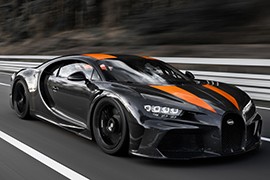
With a top speed of 300 mph (490.484 kph), this is not only the fastest Bugatti ever built, but also the fastest production car on the planet as of September 2019. The heavily modified Bugatti Chiron received a longer back and some extra power from the engine. Also, the “Longtail” back has an important role for aerodynamic efficiency.
Longer, meaner and more powerful, the Chiron Super Sport 300+ was specifically built for the 300 mph car title, and has taken the crown. Also, it is considered a production car, not a unique model, which makes the prize even more valuable.
The modified W16, 8-cylinder engine with four turbochargers develops 1578 hp. Since more internal components are carried-over from the Centodieci (110) model, the gearbox and transmission are the same, with an 8-speed automatic gearbox and all-wheel-drive. An interesting fact is that Bugatti made a record-run with the prototype at 304 mph, it then installed a 300 mph speed limiter for the production model.
Only 30 units will be made, with the first one having been sold right when the car was launched. The customer actually signed the papers on top of the first car's roof. The launch of this new model was showcased with the occasion of the finale of the Grand Tour, a rally that payed an homage to Ettore Bugatti's life, from Milan to Paris via Molsheim. The price tag is a staggering 3.5 million euro.